De-risk your embedded AI projects
from the very first decisions
We help companies scope their embedded AI use cases,
validate feasibility and build early demonstrations.
De-risk your embedded AI projects
from the very first decisions
We help companies scope their embedded AI use cases,
validate feasibility and build early demonstrations.


A relevant idea is not enough if the problem remains poorly defined. Technical choices then follow without a clear reference for expected value or success criteria, risking costly exploration without addressing the right problem.
A solution that looks credible on paper can be challenged by project constraints: resources, integration, safety or regulation. Discovering them too late means reworking choices already made and weakens the next development stages.
Technical choices can be relevant in isolation yet become inconsistent once combined. Without an overall view, the project accumulates trade-offs across hardware, data and models, then discovers too late what must be reviewed or abandoned.
A demonstration can build confidence while leaving the real questions unanswered. Validating a model, sensor or isolated scenario does not guarantee viability once the solution faces the constraints, data and uses of its real operating environment.
Without clear direction toward a prototype, pilot or integration, the project can progress without a defined endpoint. Decisions made too late then weaken the transition, even when the first results are encouraging and technically promising.
We help teams better scope the need, arbitrate technical choices and validate key assumptions before uncertainties start costing time, budget or credibility.
 Contact us
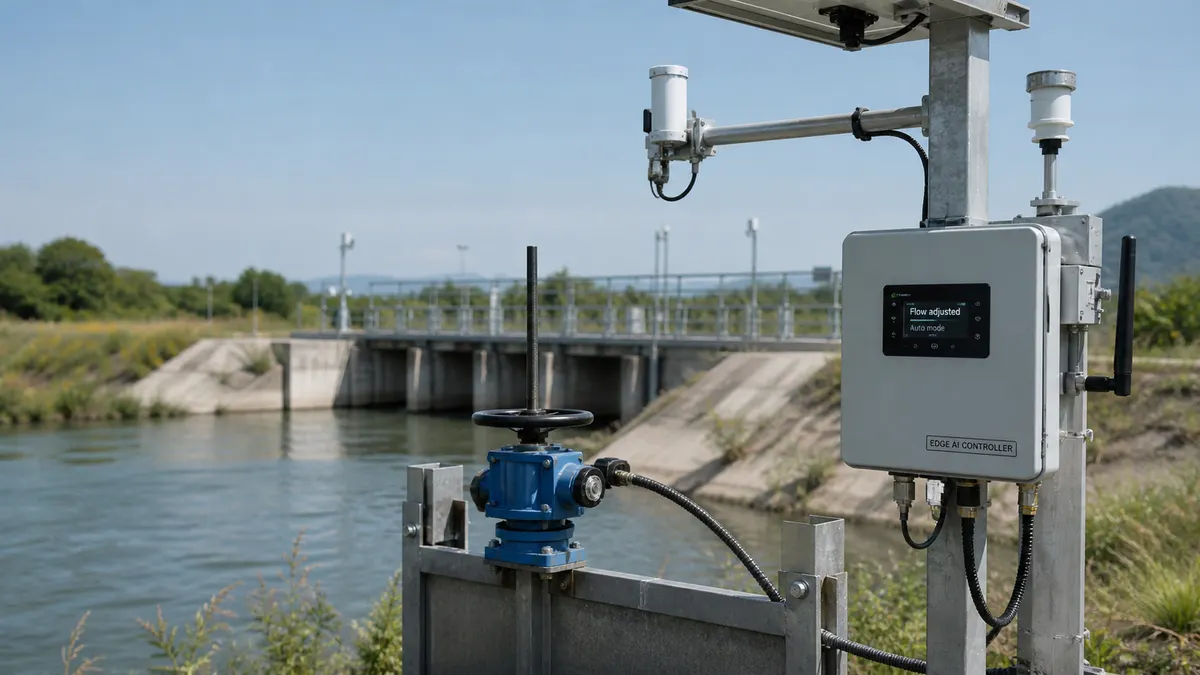
In a product or piece of equipment, embedded AI takes the form of functions that detect, monitor, assist or trigger an action.

In a product or piece of equipment, embedded AI takes the form of functions that detect, monitor, assist or trigger an action.
Vision
Physical signals
Audio
Multimodal
Highly constrained systems
Embedded systems
Hybrid architectures
Connected and autonomous solutions
Let's discuss your need, constraints and the approach best suited to your project.
Schedule a call
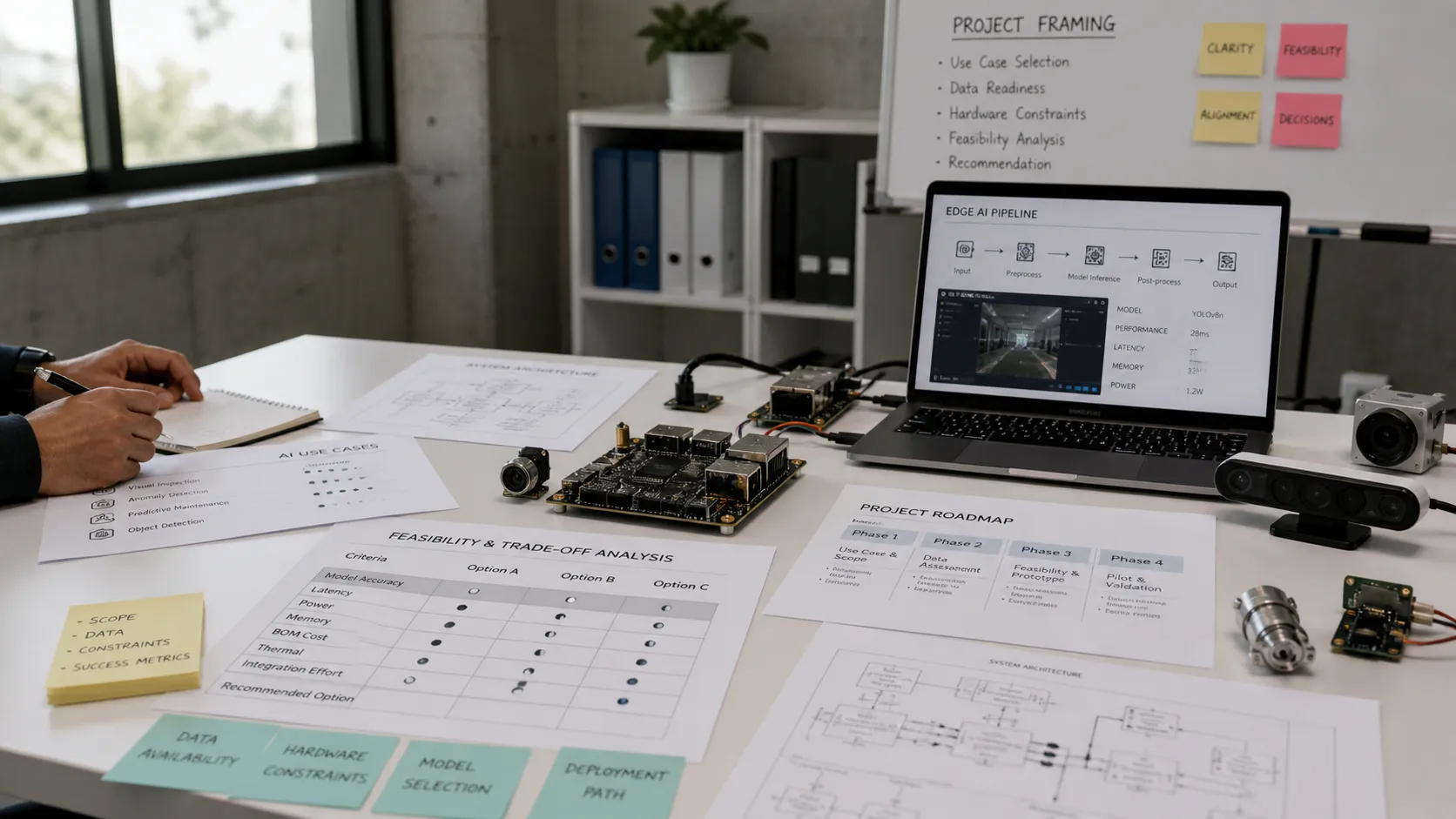
 Scoping workshop Scope
 We start the engagement with a stakeholder workshop to clarify the need, frame the objective and set a realistic level of requirements. This step helps select a priority use case and define clear success criteria.
Existing review Data and constraints We review the available data, existing assets, target deployment and project constraints. This step helps identify what can be used, what needs to be completed and what must be secured for the next stages.
Feasibility study Technical choices We test the technical options against the project and its constraints: performance, integration, complexity and risk. This step helps retain credible choices and better assess their impact on the whole project.
Recommendations Action plan We summarize the key findings from the engagement and turn them into concrete, clear and actionable steps. Depending on the project, this may lead to a proof of concept, prototype, pilot or integration roadmap.
For Technovatis, a manufacturer of special-purpose machines for major industrial players, MinimAI designed and evaluated a multimodal embedded quality-control solution combining vision and force measurement. Running on a resource-constrained embedded architecture, the system detected 100% of the anomalies observed during the study, with no false positives or false negatives, while processing each insertion in real time.
Briefly describe your context, goals and main constraints. We will get back to you for a first exchange.